
Polonnaruwa is one of Sri Lanka’s most important ancient cities and a UNESCO World Heritage Site. Once the island’s medieval capital it is renowned for its remarkably preserved ruins, including royal palaces, temples, monasteries and impressive stone sculptures. Visitors can explore archaeological treasures such as Gal Vihara which is famous for its magnificent Buddha statues carved into granite rock. The city is surrounded by scenic reservoirs, lush greenery and abundant wildlife creating a peaceful atmosphere for sightseeing. Polonnaruwa offers a fascinating glimpse into Sri Lanka’s rich history, architectural achievements and cultural heritage making it a must visit destination for history enthusiasts.

Exploring the ancient city of Polonnaruwa is like stepping back into Sri Lanka’s medieval golden age. As the island’s capital during the 11th and 12th centuries Polonnaruwa became a center of culture, religion and engineering. Today, visitors can wander through a vast archaeological park filled with remarkably preserved palaces, temples, audience halls and stone monuments. The ruins are spread across a scenic landscape of trees and reservoirs making cycling one of the most enjoyable ways to explore the site. Highlights include the remains of the Royal Palace, the Sacred Quadrangle and impressive Buddhist shrines that showcase the architectural achievements of the ancient kingdom. Informative signboards and local guides help bring the city’s history to life revealing stories of kings, monks and daily life from centuries ago. The combination of historical significance, beautiful surroundings and well preserved structures makes Polonnaruwa one of Sri Lanka’s most fascinating cultural destinations.
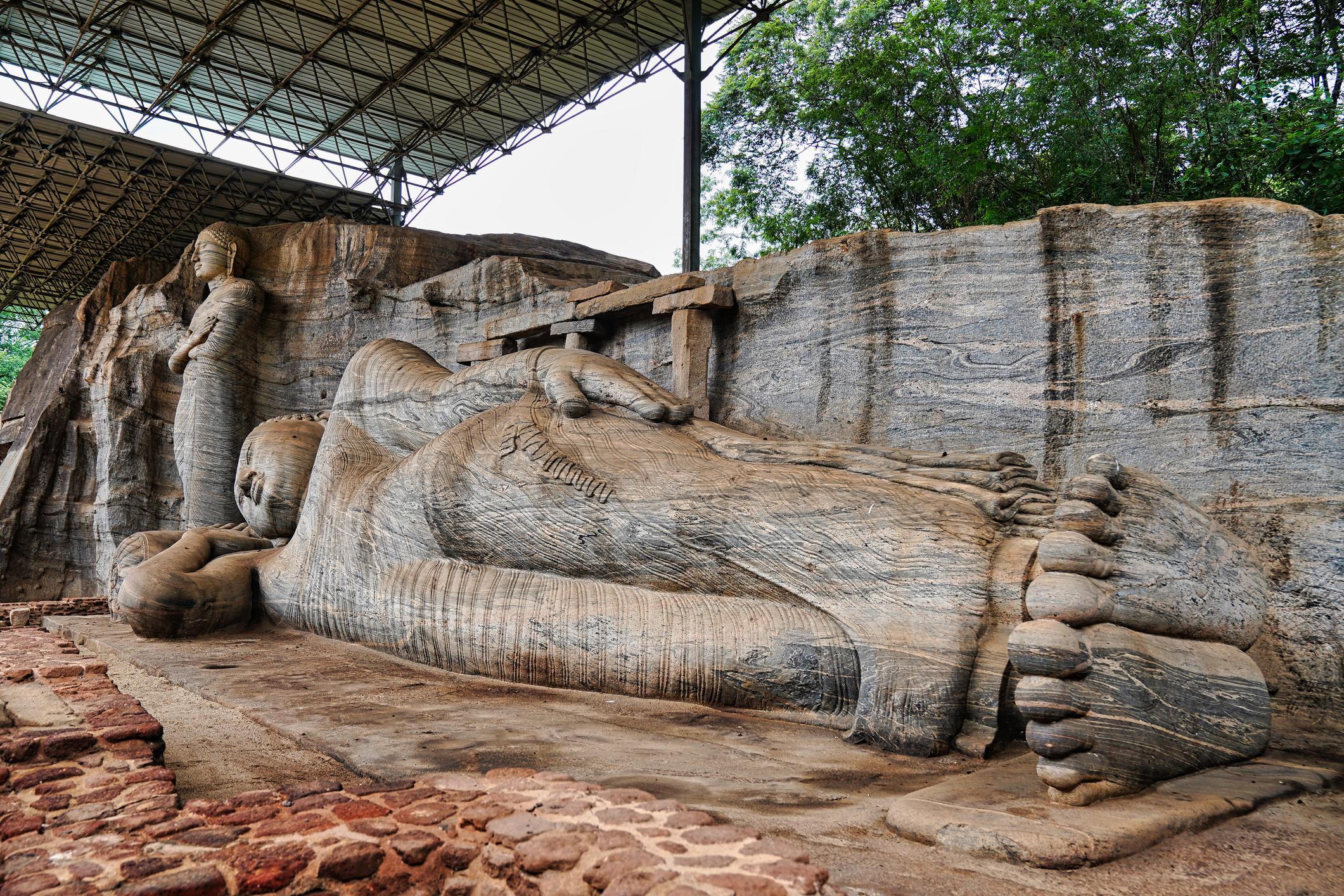
Gal Vihara is considered one of the greatest masterpieces of Sri Lankan rock carving and is the most famous attraction in Polonnaruwa. This sacred site features four magnificent Buddha statues carved directly into a single granite rock face. The sculptures include a seated Buddha in meditation, a standing Buddha with graceful features and a stunning reclining Buddha measuring over fourteen meters in length. Created during the reign of King Parakramabahu I, the statues display extraordinary craftsmanship and spiritual symbolism that continue to inspire visitors today. The peaceful setting adds to the experience, allowing travelers to appreciate both the artistic and religious significance of the monument. Early morning and late afternoon visits are particularly rewarding, as softer light highlights the intricate details of the carvings. Gal Vihara offers a powerful glimpse into Sri Lanka’s Buddhist heritage and remains one of the country's most photographed and admired historical landmarks.

The Sacred Quadrangle is a compact but incredibly important section of the ancient city containing some of Polonnaruwa’s finest religious monuments. This elevated area is home to beautifully preserved temples, shrines and ceremonial structures that demonstrate the sophistication of medieval Sri Lankan architecture. The most celebrated monument is the Vatadage, a circular relic house adorned with stone carvings, moonstones and Buddha statues. Visitors can also admire the Thuparama image house and several other sacred structures that once played a central role in Buddhist worship. Despite its relatively small size the Sacred Quadrangle offers an impressive concentration of historical and artistic treasures. Walking among these monuments provides insight into the spiritual life of the ancient kingdom and the importance of Buddhism in shaping Sri Lankan culture. For history enthusiasts and photographers this area is one of the highlights of a visit to Polonnaruwa.

Parakrama Samudra, meaning “Sea of Parakrama,” is a vast man made reservoir built by King Parakramabahu I and remains one of Sri Lanka’s greatest engineering achievements. Stretching across the landscape beside the ancient city the reservoir was designed to support agriculture and water management throughout the kingdom. Today, it provides visitors with beautiful scenery and opportunities to observe local wildlife, including birds, monkeys and occasionally elephants in nearby areas. The calm waters create a peaceful setting that contrasts with the grandeur of the archaeological ruins. Many travelers visit in the late afternoon to enjoy cooler temperatures and spectacular sunset views reflected across the reservoir. The scale of the project demonstrates the advanced engineering knowledge of ancient Sri Lankan civilization. Visiting Parakrama Samudra offers a deeper appreciation of how the kingdom sustained its population and transformed the surrounding environment through innovative water management systems.
Submit your query today and one of our representative will get in touch with you soon

.png)